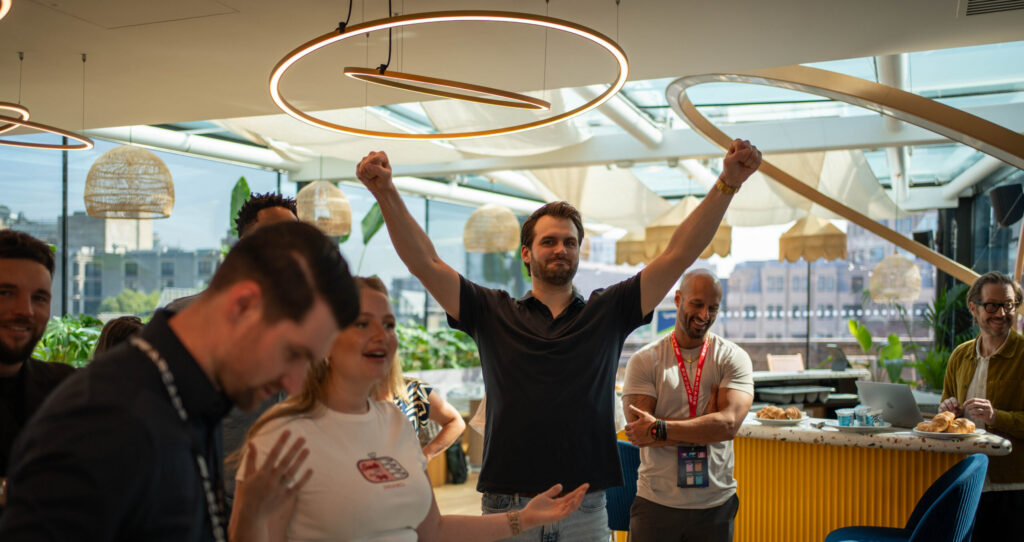
The organisations that scale most successfully are the ones that scale behaviours as deliberately as they scale operations
Most large-scale change programmes already have a strong strategy behind them. So why do they so often struggle to get going?
I’m sure you’ve seen the pattern before. The ambition is right. The investment is there. The tools and technology are ready to go. Yet somewhere between strategy and execution, momentum slows. Some teams adapt quickly, while others take longer to find their rhythm. As consistency varies across teams and locations, maintaining progress, and delivering a seamless customer experience, becomes more difficult.
The space between strategic ambition and everyday behaviours is where many organisations either build traction or begin to lose it. So amid growing operational pressures, how do you scale transformation whilst creating a culture where people stay aligned, engaged, and moving towards the same goal?
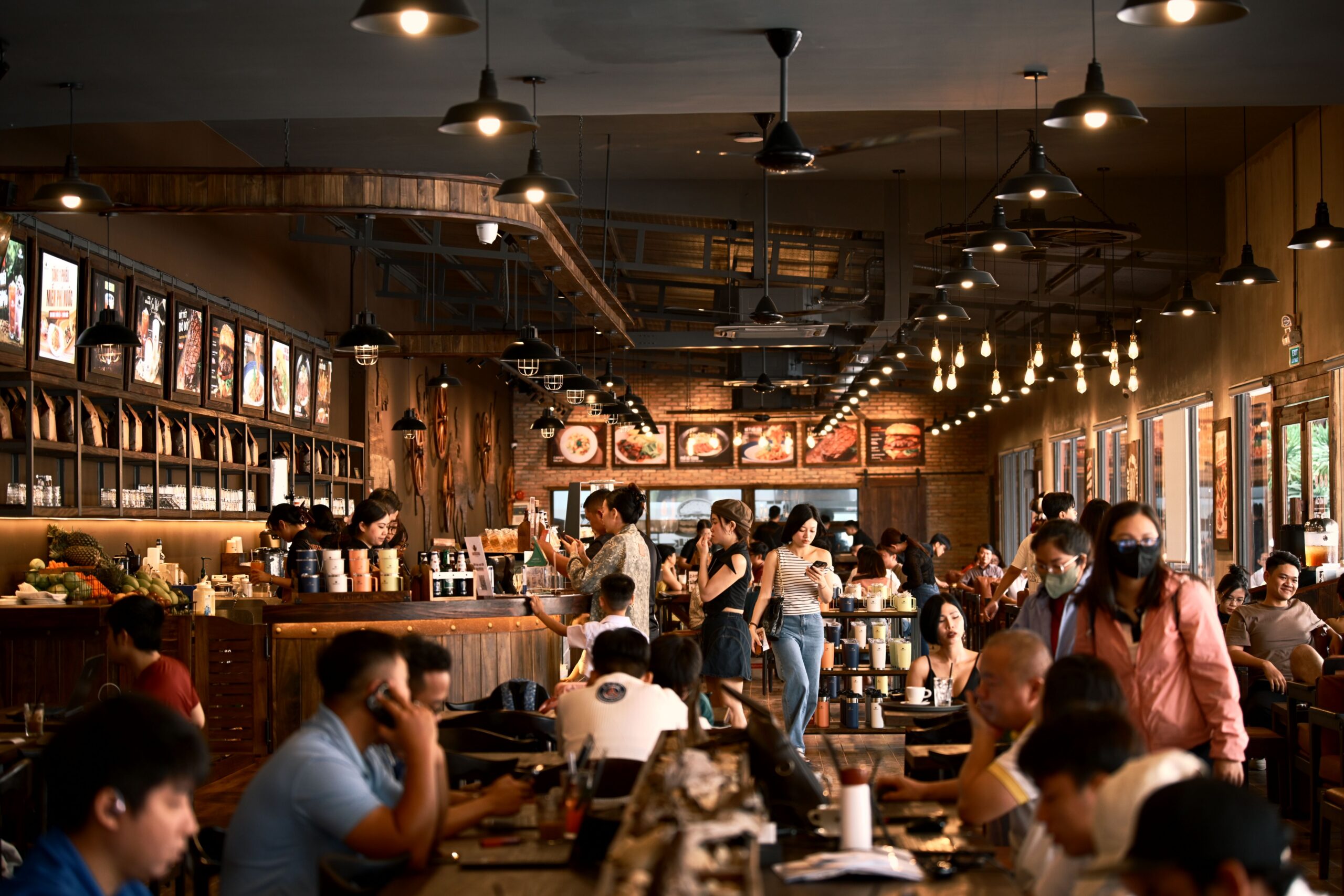
Culture is rarely lost in one dramatic moment
Culture shifts gradually through the behaviours leaders reinforce, or fail to, and the standards teams begin to accept. And, consequentially, the inconsistencies customers eventually start to feel.
As Harvard Business Review writes, 62% of organisations still treat scaling transformation as a top-down effort, involving only some or very few employees. Organisations that place people at the centre of transformation build more resilient cultures where employees embrace change, learn faster and stay engaged over time.
“People-centred organisations are 2.3x more likely to succeed in transformation efforts.”
In practice, that means creating environments where people can confidently apply the behaviours the business wants to be known for, which is particularly important in customer-facing industries where culture is experienced in real time.

Culture can’t just be articulated through strategy decks alone, but through everyday operational moments:
- How leaders communicate under pressure
- How managers coach performance
- How teams support each other during busy shifts
- How confidently people make decisions
- How customers feel walking through the door
These are the moments that shape culture at scale.
Gallup’s latest State of the Global Workplace report found manager engagement was nearly four times higher in best-practice organisations, reinforcing just how critical leadership behaviour is to sustaining performance and engagement during periods of change.
That becomes even more important as organisations continue balancing:
- Rapid growth
- Evolving customer expectations
- AI-enabled technologies
- Operational complexity
- Leadership capability gaps
- The need to maintain human connection at scale
In many ways, the more organisations automate and optimise, the more valuable emotionally intelligent leadership becomes. Gallup’s 2026 State of the Global Workplace report also found employees were more than twice as likely to adopt AI tools consistently when managers actively supported and reinforced the change day to day.
Companies getting transformation right are operationalising culture
The companies getting transformation right treat culture as something that must be reinforced consistently, role modelled by leaders, measured carefully and experienced clearly across the business.
The commercial impact of poor culture is significant. McKinsey research suggests employee disengagement could cost a median-size S&P 500 company between $228 million and $355 million per year in lost productivity.
The strongest retail brands are not simply communicating values more often they are turning them into clear, repeatable behaviours people can apply every day.
How F1® Arcade focused on scaling behaviours
F1® Arcade was growing fast. The hospitality and competitive socialising company is famous for creating exhilarating experiences and was set for an enormous global growth plan.
With new venues opening globally at Formula 1 speed, the business recognised that sustaining the energy, personality and customer experience behind the brand would require more than operational excellence alone.
It would require leaders at every level to consistently bring the culture to life with the confidence, reinforcement and practical leadership skills to lead teams through rapid growth and change.
McKinsey describes successful transformation leaders as those who “serve with humility as a role model for change” and demonstrate the humanity to go through change with employees, not simply communicate it to them. That thinking is central to how NKD operates as a change partner, helping organisations embed behavioural change in ways that feel practical, human and sustainable.
In partnership with F1® Arcade, NKD created Leading to Win, a two-day immersive leadership experience built around the organisation’s philosophy of ‘Unconventional Care’.

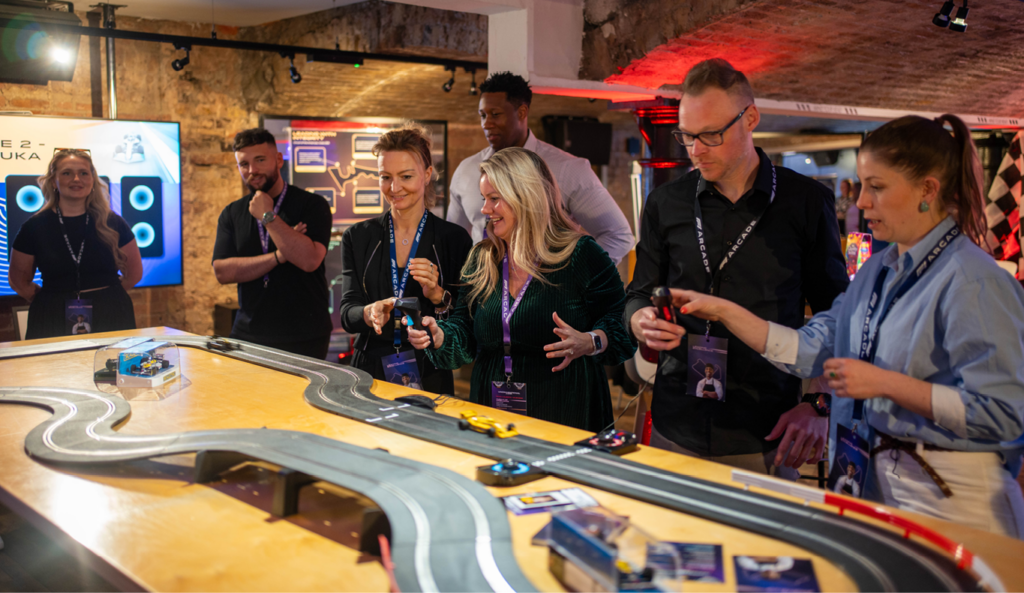
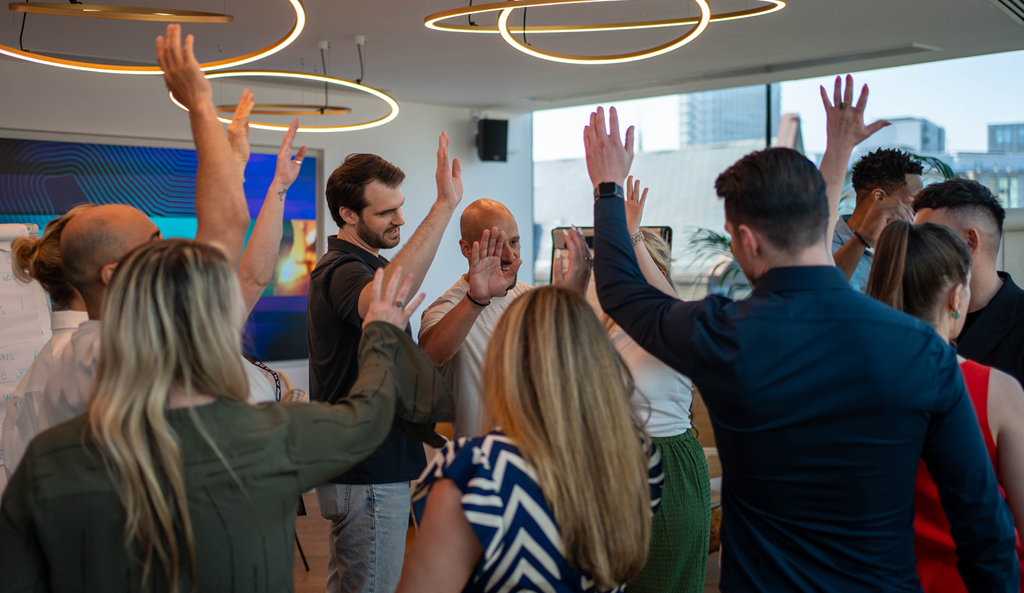
The programme was about instilling consistent leadership behaviours that could scale alongside the transformation and business as new venues, teams and managers joined the organisation at pace. This was a real example of an organisation scaling behaviours as intentionally as they scaled operations.
Both the experience and toolkit took leaders through a series of Formula 1-inspired race experiences, each designed around the operational realities of leading high-performing hospitality teams.
Every stage reinforced specific leadership behaviours linked directly to customer experience, team engagement and performance.
- Race 1 focused on delivering ‘Small, Remarkable Moments’ for guests while developing strengths-based leadership across teams
- Race 2 explored resilience, energy and sustainable high performance under pressure
- Race 3 introduced practical coaching and feedback frameworks leaders could immediately apply in day-to-day conversations
- Race 4 focused on team communication, helping leaders deliver clear, motivating briefs that created consistency across guest experience and team culture
Importantly, the experience was designed to feel practical, emotionally engaging and immediately usable within the rhythm of the business. And the results reflected that.
- 100% of leaders committed to applying the behaviours and frameworks introduced during the programme
- 100% recommended the experience to other managers and aspiring leaders
The programme connected leadership behaviours to measurable commercial outcomes. By creating greater consistency in how leaders coached, communicated and supported their teams, F1® Arcade strengthened the conditions for improved guest experience, higher spend per guest, stronger team engagement and pride, and increased internal promotion rates as the business continued to grow.
Leading to Win demonstrates the difference between delivering training and embedding behavioural change at scale. One gives people information. The other creates the confidence, reinforcement and the operational consistency required for everyday behaviours to stick in real work environments.
Growth exposes poor culture faster than most organisations expect
If you’re in the process of delivering transformation that’s not sticking, ask yourself these questions:
- Are we scaling behaviours as intentionally as we’re scaling operations?
- Do our leaders know how to consistently reinforce the culture we want customers to experience?
- Are we translating values into practical everyday behaviours teams can apply under pressure?
- What happens to customer experience consistency as we grow?
- Are we creating conditions where people can succeed sustainably at scale?
At NKD, we know that scaling transformation is about making it sustainable, and depends on helping leaders reinforce the right behaviours consistently as organisations grow and evolve.
Gallup’s research suggests managers account for 70% of the variance in team engagement, highlighting just how influential leadership behaviour becomes as organisations scale transformation. The challenge isn’t simply preserving culture during growth. It’s ensuring leaders have the confidence, capability and reinforcement tools to bring that culture to life consistently, on a daily basis.
The organisations creating long-term competitive advantage are rarely the ones moving fastest. They’re the ones scaling behaviour, culture, leadership and customer experience with consistency.
Because in customer-facing organisations, culture isn’t abstract. Customers experience it every day.
