
Let’s do a playful thought experiment. Imagine that you’re about to create a brand-new leadership team that endures in today’s world. A helpful genie asks you what single quality you would like your leadership team to embody? The twist – you can only use one word to describe that leadership team.
‘Impossible!’ I hear you say. ‘Leadership is a cocktail of different ingredients. I can’t pick one.’
There are so many contenders aren’t there? Vision, integrity, empathy, accountability, resilience, intelligence, decisiveness, strategy, humility, courage, inspiration, creativity, collaboration, patience. (In fact, if you wanted to write a leadership book, pick any 3 of these words, tell some stories and it won’t seem out of place on many bookshelves…)
So, what quality would you pick? (Go on – close your eyes and ask yourself!)
If it helps, you can choose what our hypothetical team is doing. Maybe they’re organising the 2032 Olympics, implementing AI in a logistics company – or putting out literal fires.
As a Solutions Director at NKD, here’s where my brain goes…
‘Psychological safety’ might have the most evidence…
I know it’s not one word – but it really is important.
Robust evidence shows that psychological safety increases engagement, wellbeing, and profitability. Google famously researched what was the most likely predictor of a team’s success. Was it hours worked? Emotional intelligence? Team diversity? All useful – but the number one was ‘psychological safety’.
It’s central to NKD’s impact and ethos. Not just in our work of crafting social learning experiences that allow valuable idea-exchange, but in our own company culture where we’re free to fail, be ourselves and bring any ideas (no matter how fringe) to the benefit of the team.
‘Trust’ is another pillar of strong leadership
There is a storm of distrust in the world – you can see it in the geopolitical disruption, AI developments and the flood-the-zone media tactics. But if a leadership team can generate trust, and lean in to each other’s strengths – then it can be a port in this storm. Trust is the rock to build a value network on – and the bridge to organisational culture change.
You’ve probably seen the signals. The 2026 Edelman Trust Barometer found that 7 in 10 people globally are unwilling or hesitant to trust someone with different values, backgrounds, or information sources.
Similarly, people trust leaders less. 48% of employees said they trust their senior leaders in a November 2025 Gartner survey, down from 67% in 2024. Can you think of a leader you don’t trust?
We could learn something from Nintendo
There’s a somewhat unexpected leadership book that I read recently… ‘Super Nintendo: How One Japanese Company Helped the World Have Fun’ by Keza MacDonald.
While Nintendo might not seem relevant to a discussion of survival, games have slowly grown to dominate the entertainment industry – with Nintendo leading the charge. It’s not been easy for them. They’ve survived waves of change over 136 years. They are champions of playing what Simon Sinek would call an infinite game – their value proposition of creating fun!
Nintendo keeps a very stable core purpose (bringing joy through play) while constantly changing how it delivers that – moving from toys to consoles, from Game Boy to Wii, from Mario to Splatoon.
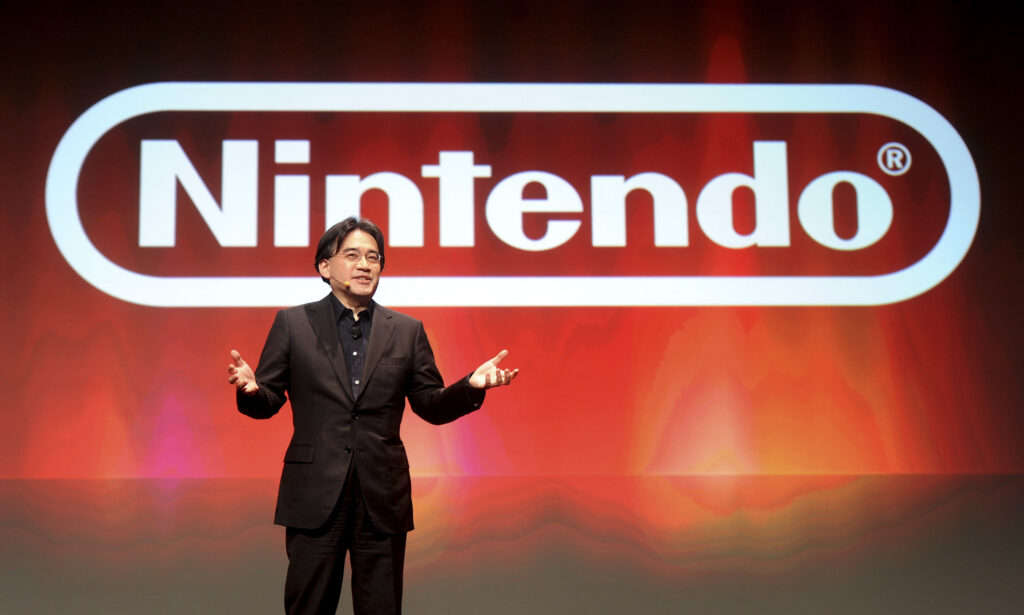
If you do the same thing as others, it will wear you out. Nintendo is not good at competing so we always have to challenge the status quo by making something new, rather than competing in an existing market.
Satoru Iwata
What’s brilliant about their particular flair of innovation is that so often these new play paradigms use existing technologies. They aren’t the most expensive, high graphics or flashy systems. Pokémon go used existing maps technology. Wii sports used existing motion sensor technology. The recent Labo games used one of the most innocuous technologies of all time… ‘cardboard’. The answers – it seems – are hiding in plain sight!
Enduring advantage comes from re‑seeing what you already have.
The one word I’d use for the ideal leadership team…
The word is Adaptability.
The challenges coming down the road are in more shapes and stripes than anything we’ve seen before. There are some scary acronyms to describe the world out there: VUCA (Volatile, Uncertain, Complex, Ambiguous) or NAVI (Nonlinear, Accelerated, Volatile, Interconnected).
But by being able to remix what we are, we can create a new range of solutions to face these ever-changing problems.
A truly adaptable team could become trustworthy, psychologically safe – and all the other ingredients. As you may have heard, it’s not the strongest of the species that survive, it’s the most adaptable to change.
Leading change can be hard, but look at Nintendo – they’ve been around since the 1800s – they’ve clearly endured! So, how can we be more adaptable?
- Stay fixed on purpose, flexible on method. Your “why” should be stable. Your “how” should be endlessly remixable
- Build teams that can both generate and absorb surprises. Skills matter – but mindsets matter more. Create a culture where experimentation isn’t a risk; it’s an expectation. Nintendo’s breakthroughs often came from unlikely ideas hiding in plain sight
- Teams that have a variety of life experiences can generate and navigate a greater range of ideas. Effective and high-performing teams are made up of multiple generations
- Make lots of small bets with high upside risk. Adaptable leaders don’t wait for perfect certainty. They prototype, test, and learn fast
We help clients thrive through change by giving them the mindsets, skills, and behaviours they need. If you’re looking to build psychological safety, trust or adaptability within your teams, check out our leadership development solutions.
